Badge Battles: How Achievement Systems in Streaming Platforms Build Lasting Viewer-Streamer Relationships
Quinn Beck · May 31, 2026
Badge Battles: How Achievement Systems in Streaming Platforms Build Lasting Viewer-Streamer Relationships
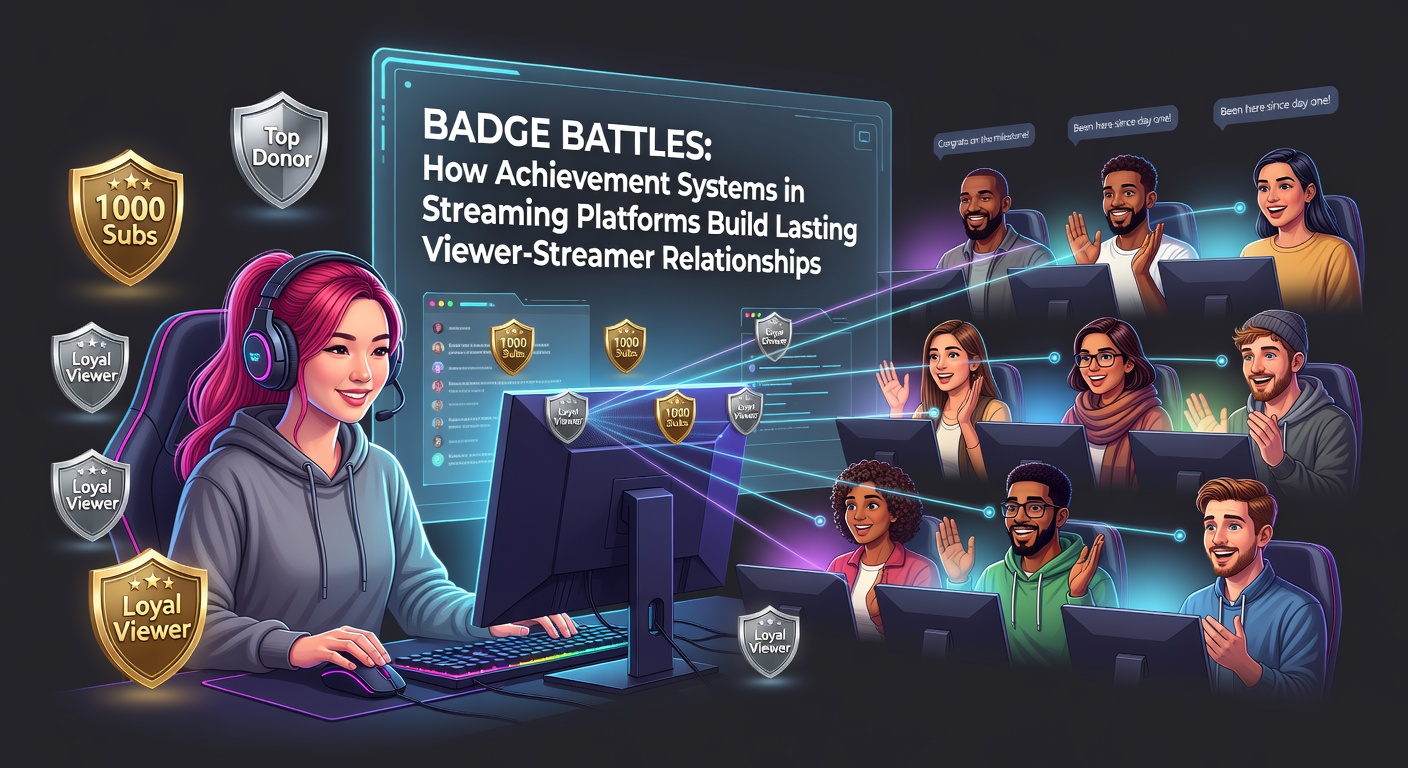
Streaming platforms have integrated achievement systems that award digital badges for viewer participation and streamer milestones, and these features create measurable connections between audiences and content creators over extended periods. Data from major platforms shows that users who earn badges tend to return to the same channels more frequently than those who do not participate in such systems, while streamers report higher average watch times when badge progress is visible during broadcasts.
Mechanics of Badge Systems Across Platforms
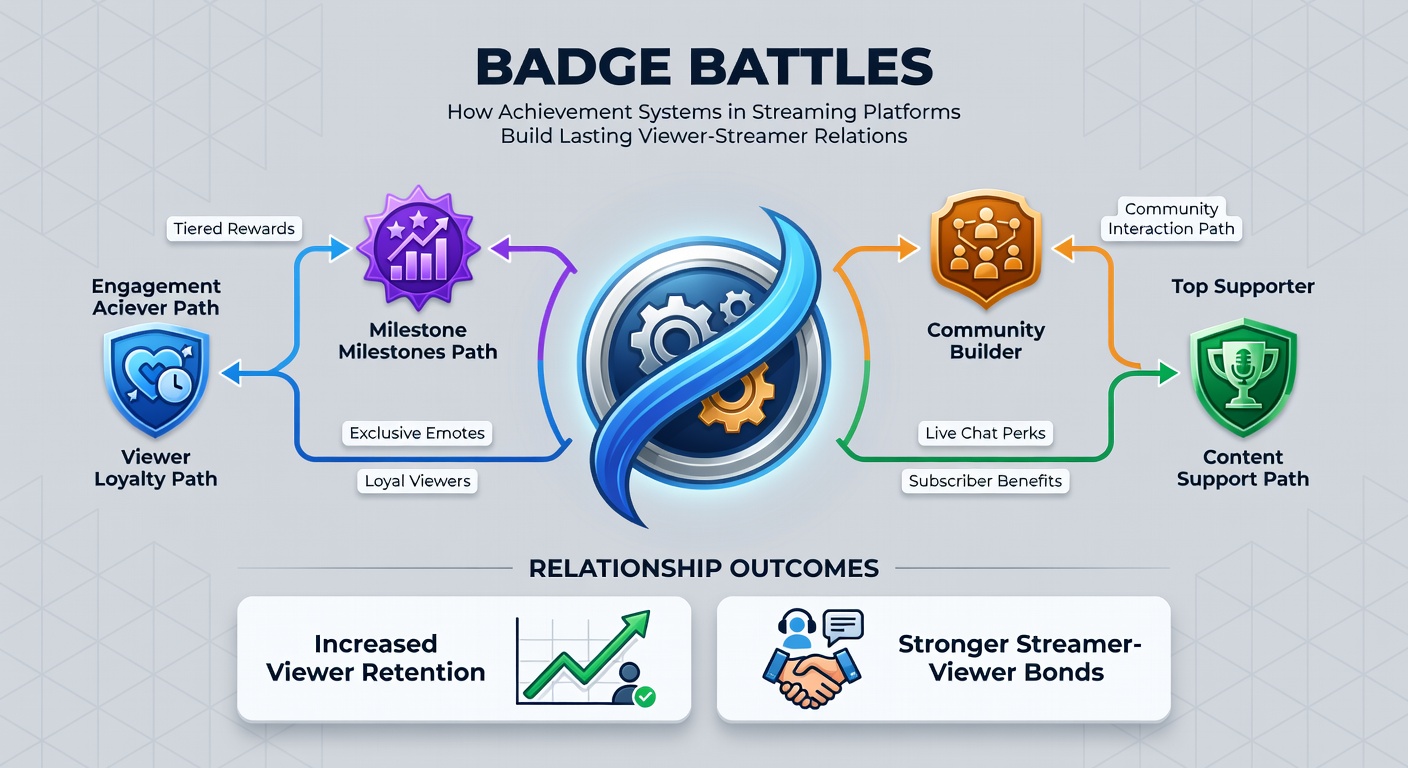
Twitch introduced its first widespread badge program in 2017 and expanded it through 2025 with tiered loyalty rewards, yet YouTube Gaming followed with similar community milestone badges that track hours watched and chat interactions. Viewers accumulate points through consistent engagement, and these points unlock visual badges that appear next to usernames in chat windows, whereas streamers gain access to custom badge sets once they reach follower thresholds set by the platform. The process operates on automated tracking algorithms that log activity without manual intervention from either party, and updates in May 2026 added cross-platform badge portability for select creators who stream on multiple services simultaneously.
Data Patterns in Viewer Retention
Industry reports compiled by the Entertainment Software Association indicate that channels employing visible achievement trackers experience repeat viewership rates up to 34 percent higher than comparable streams without such features, and this pattern holds across North American and European markets according to aggregated platform metrics. Researchers at the University of Melbourne examined chat logs from 2024 and found that badge-earning viewers sent 2.7 times more messages per session on average, which in turn prompted streamers to acknowledge those users during live segments and strengthen the feedback loop. Australian government digital economy statistics from the same period further reveal that participation in badge challenges correlates with longer session durations, particularly among users aged 18 to 34 who log in during evening hours across time zones.
Case Examples of Sustained Engagement
One North American variety streamer reached affiliate status in early 2025 after implementing a series of viewer-submitted badge challenges that required collective chat goals, and the channel maintained an average concurrent audience of 1,200 within six months while badge completion rates climbed steadily. European esports broadcasts have adopted similar systems where teams unlock regional badges for supporters who attend multiple qualifier events, and data collected by the European Games Developer Federation shows these badges increase cross-stream migration when viewers follow affiliated creators. Platform updates rolled out in May 2026 introduced seasonal badge resets that encourage renewed participation cycles, and early metrics suggest these resets prevent stagnation in long-term viewer counts for established channels.
Technical Integration and Platform Tools
Developers at streaming services embed badge trackers directly into overlay software so that progress bars appear alongside gameplay footage without requiring separate applications, and this seamless display keeps both viewers and streamers focused on the shared activity. API documentation released by major platforms allows third-party tools to pull badge data in real time, which enables custom alerts when milestones approach completion while maintaining compliance with data privacy regulations in multiple jurisdictions. Observers note that these integrations reduce technical barriers for smaller creators, since badge functionality now ships as a default option rather than an optional add-on.
Relationship Dynamics Over Time
Longitudinal studies conducted by independent research firms demonstrate that badge systems contribute to community stability because they provide visible markers of shared history between a streamer and regular viewers, and these markers become reference points during conversations that extend beyond individual streams. Viewers who collect multiple badges from one channel often form informal groups that coordinate participation strategies, which increases the likelihood of sustained subscriptions and donations. Streamers benefit from analytics dashboards that break down badge acquisition by demographic segments, allowing targeted content adjustments without guesswork, and this data-driven approach has been documented in reports from Canadian media research centers tracking digital entertainment trends through 2026.
Conclusion
Achievement systems continue to evolve as platforms refine algorithms and introduce new badge categories tied to emerging content formats, and the resulting viewer-streamer bonds rest on consistent, trackable interactions rather than isolated events. Metrics gathered across regions confirm that these digital markers support retention patterns that benefit both sides of the relationship, while technical advancements scheduled for later in 2026 promise further refinements in how badges integrate with live production workflows.