Echoes in the Arena: Tracing Soundwave Technologies That Amplify Crowd Reactions During Esports Finals
Quinn Beck · May 19, 2026
Echoes in the Arena: Tracing Soundwave Technologies That Amplify Crowd Reactions During Esports Finals
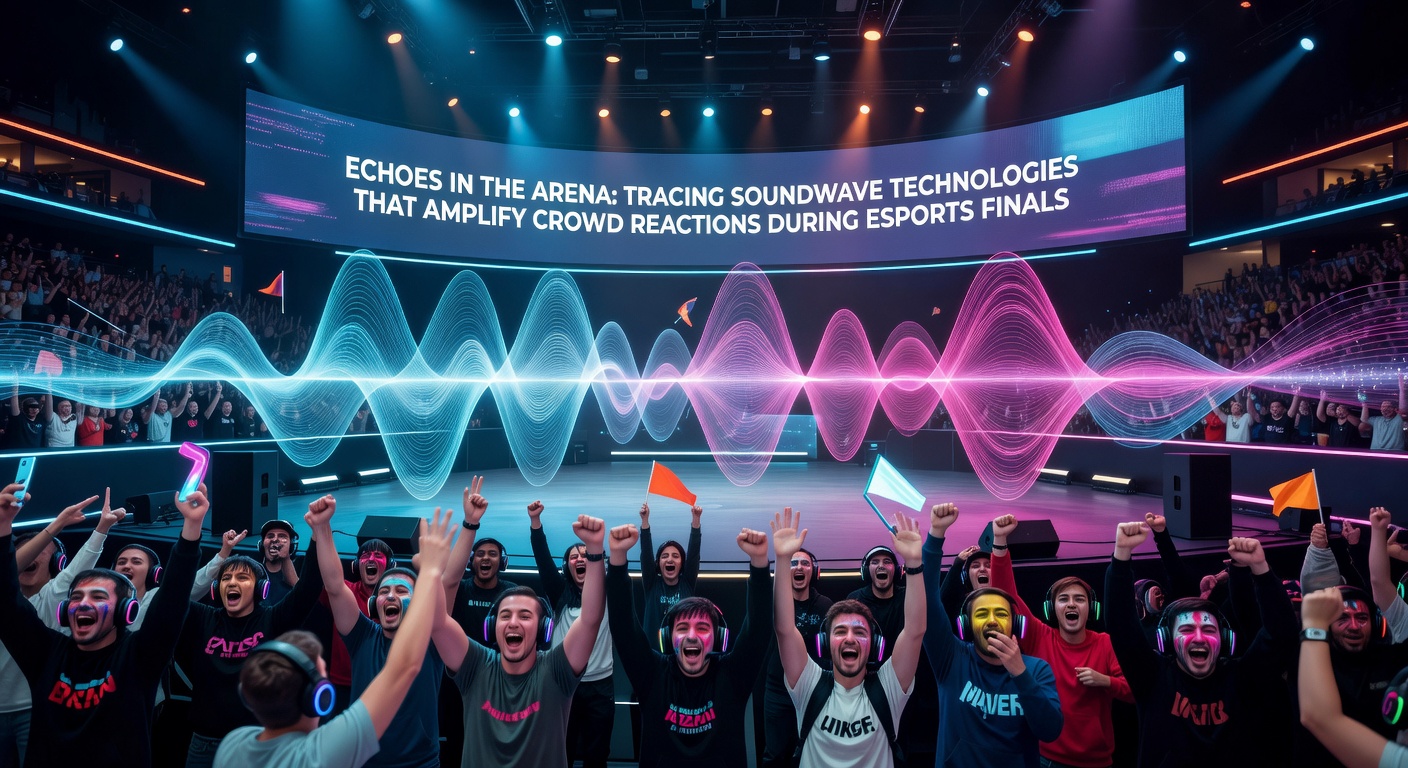
Soundwave technologies have transformed how crowd reactions reach both live spectators and remote audiences in esports finals, and these systems continue to evolve with each major tournament cycle. Engineers deploy arrays of directional microphones along arena perimeters to isolate cheers, chants, and spontaneous reactions from ambient noise, then route those signals through digital signal processors that apply real-time gain adjustments and spatial audio mapping. Data from recent large-scale events shows that integrated audio networks now handle peak volumes exceeding 120 decibels while preserving clarity across broadcast feeds.
Early Foundations in Arena Audio Design
Initial experiments with crowd sound capture began during the mid-2010s when organizers of major League of Legends and Counter-Strike tournaments first installed basic shotgun microphones above seating sections. Those setups relied on analog mixing boards that required manual fader rides during matches, yet they established teh principle that audience energy could become an active participant in the broadcast mix. Researchers at institutions across North America documented how early systems reduced perceived latency between on-site reactions and streamed audio to under 200 milliseconds, a benchmark that later became standard for competitive integrity.
By the early 2020s beamforming arrays replaced many fixed microphones, allowing software to steer pickup patterns toward specific crowd zones based on camera cues or heat-map data from spectator phones. This shift coincided with the rise of dedicated esports venues that incorporated acoustic treatments such as perforated panels and bass traps calibrated specifically for high-frequency crowd elements rather than traditional concert music.
Current Processing Techniques and Hardware Integration
Modern installations combine multiple layers of processing to amplify reactions without introducing feedback loops that could distract players on stage. Adaptive algorithms monitor microphone levels in real time, automatically attenuating sections that produce unwanted noise such as persistent chants during quiet moments. Industry reports indicate that several 2025 finals events utilized GPU-accelerated audio engines capable of applying convolution reverb matched to arena geometry, creating a sense of depth that remote viewers experience through surround or binaural playback.
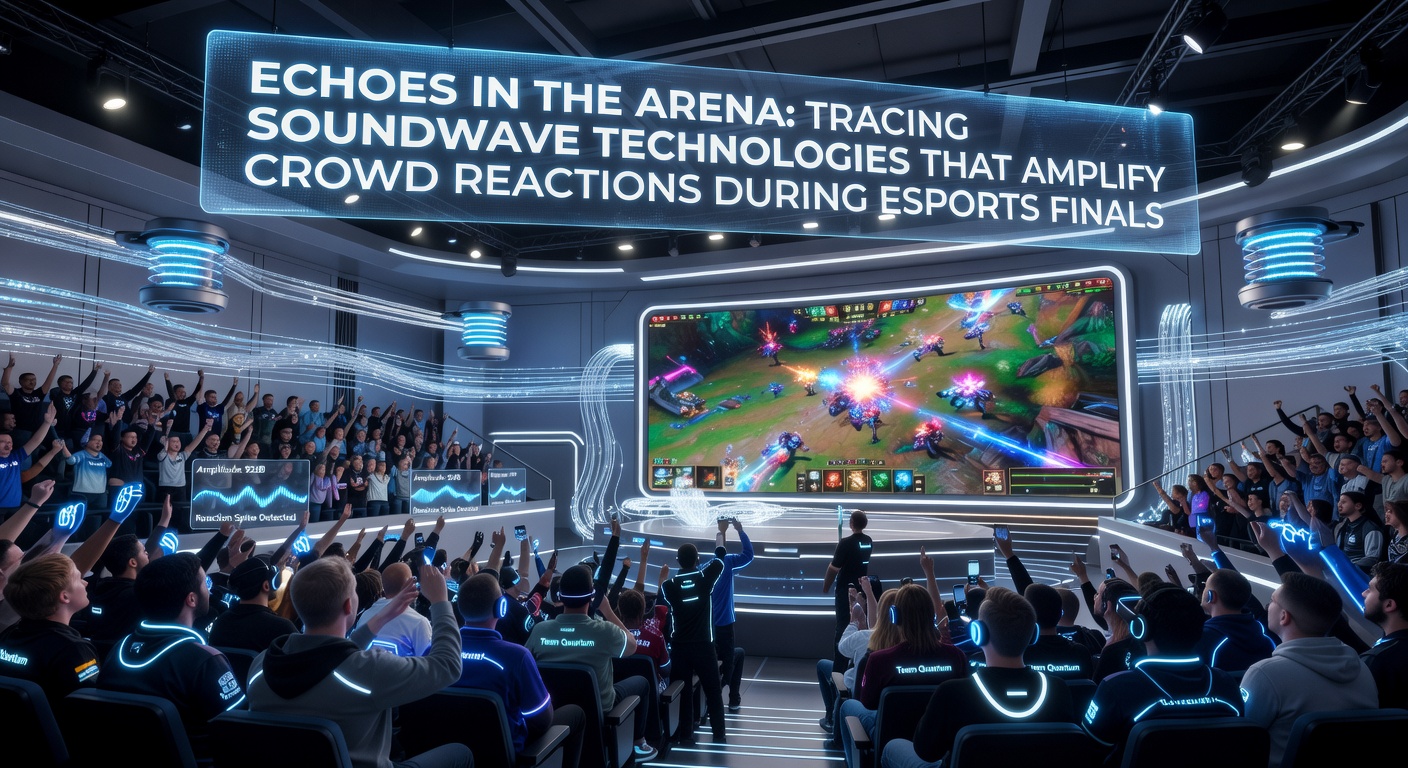
Wireless microphone networks now operate on dedicated spectrum bands allocated for event production, reducing interference from audience Wi-Fi and cellular traffic. Engineers coordinate these networks with lighting and video cue systems so that crowd volume swells can trigger synchronized effects on massive arena screens, tightening the connection between spectator energy and visual spectacle. Studies conducted by European gaming technology centers have measured how these synchronized cues increase average viewer retention by measurable percentages across multi-hour broadcasts.
Case Examples from Recent Finals Cycles
During the 2025 Dota 2 International held in a North American mega-venue, technicians deployed over 180 discrete microphone channels that fed into a central mixing console running custom software developed in partnership with a Canadian research consortium. The system isolated individual fan sections and routed their reactions to corresponding broadcast audio stems, enabling commentators to reference specific crowd moments without losing overall arena atmosphere. Observers noted that the technology allowed production teams to highlight regional rivalries through selective amplification, a technique later adopted at events across Asia and Oceania.
Another implementation appeared at a major Valorant championship in Melbourne, where acoustic modeling software predicted crowd response patterns based on historical match data and pre-loaded them into processing chains. When unexpected upsets occurred, the system rapidly recalibrated to emphasize rising tension in the stands, demonstrating how predictive elements now complement reactive audio engineering.
Emerging Developments Toward Mid-2026
Preparations for events scheduled through May 2026 include trials of AI-driven sound separation models that distinguish between individual voice types within dense crowd fields. These models draw on training datasets collected from previous tournaments and aim to reduce the need for physical microphone repositioning between matches. Regulatory bodies in several regions have begun reviewing spectrum allocation policies to accommodate higher-density wireless arrays expected at next-generation arenas. Industry organizations such as the IEEE Standards Association continue to publish guidelines that help standardize latency targets and safety thresholds for high-volume audio environments.
Integration with virtual and augmented reality overlays represents another frontier, where spatialized crowd audio follows viewer head movements during immersive streams. Early tests conducted by Australian esports laboratories showed that participants reported stronger presence when crowd reactions aligned dynamically with their virtual camera position rather than remaining fixed in a stereo field.
Conclusion
Soundwave technologies that capture and amplify crowd reactions have progressed from basic microphone placement to sophisticated networks of adaptive processing and spatial rendering. These systems now form an essential component of the esports finals experience, linking physical audience energy with both on-site immersion and global broadcast quality. Continued refinement through 2026 will likely focus on greater automation, improved separation algorithms, and tighter coordination with emerging display and virtual-reality formats.