Modular Interface Mashups: How Open-Source APIs Enable Real-Time Viewer Modifications in Shared Virtual Worlds
Ulrich Keller · Aug 23, 2026
Modular Interface Mashups: How Open-Source APIs Enable Real-Time Viewer Modifications in Shared Virtual Worlds
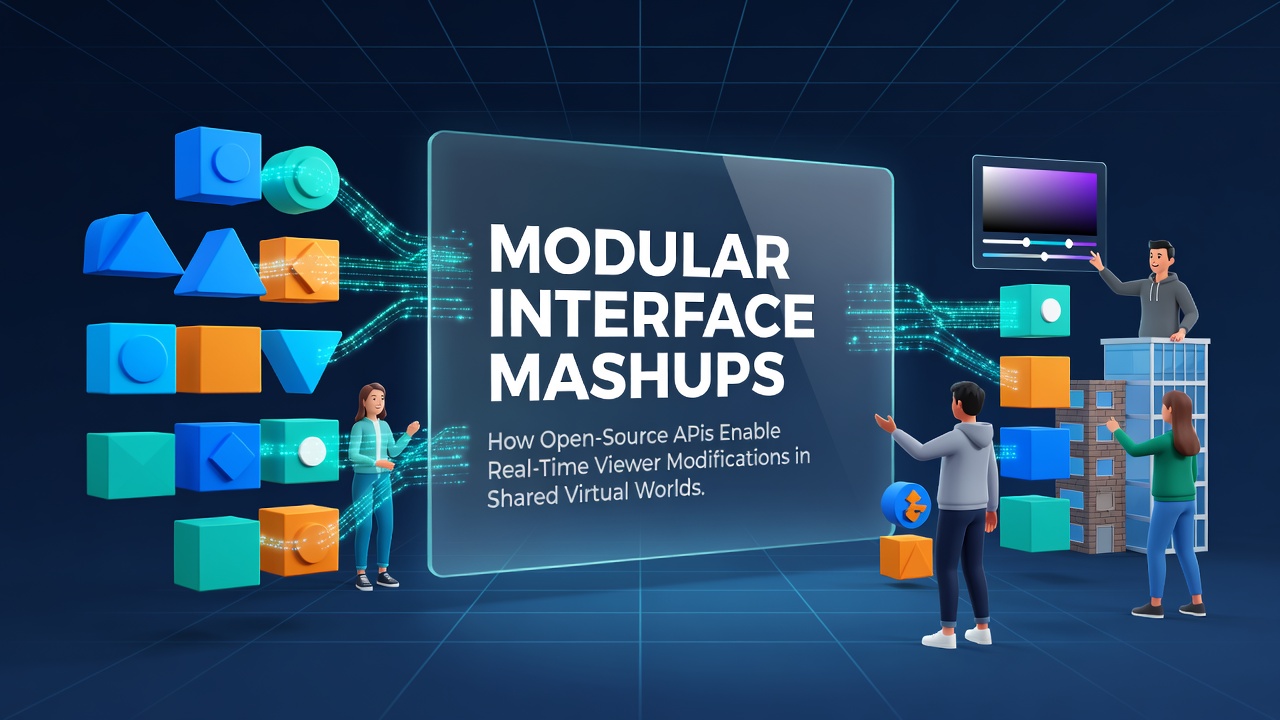
Shared virtual worlds have expanded through interconnected platforms where users occupy persistent digital spaces together, and open-source APIs now allow viewers to adjust interface elements during live sessions without requiring platform-level changes. These modular mashups combine code from multiple repositories so participants can swap visual layers, trigger event responses, or alter data displays while others remain in the same environment. Development communities release API documentation that specifies endpoints for real-time data streams, and developers integrate those endpoints into lightweight modules that load on demand.
Core Mechanics of API-Driven Modularity
Engineers structure open-source APIs around standardized protocols such as WebSocket connections and RESTful endpoints that push updates every few milliseconds, which lets viewer-installed modules receive positional data, chat logs, and environmental variables directly from the virtual world server. Each module registers with the main client through a manifest file that declares its dependencies, and the runtime environment loads or unloads the module when a viewer issues a command or when a predefined threshold occurs. Because the code sits in public repositories, contributors audit security practices and performance benchmarks before widespread adoption occurs.
One implementation merges a particle-effects module with an existing navigation overlay so viewers can highlight paths that other participants have marked as interesting; the module pulls location data through an open API call and renders the highlights without altering the underlying world geometry. Another module pulls live telemetry from wearable sensors worn by in-world avatars and displays heart-rate trends in a corner panel that any viewer can toggle on or off. These combinations rely on consistent schema definitions published by the API maintainers, which reduces conflicts when multiple modules operate simultaneously.
Viewer Modification Workflows in Practice
Viewers access a shared virtual world through a base client that exposes an extension framework, and they install mashup packages from curated lists maintained by community repositories. Once installed, a package registers callback functions that respond to events such as avatar proximity or object interaction; when those events fire, the module can request additional data through the open API and update its local rendering pipeline. The system isolates each module in its own execution context so that an error in one package does not propagate to others or to the core client.
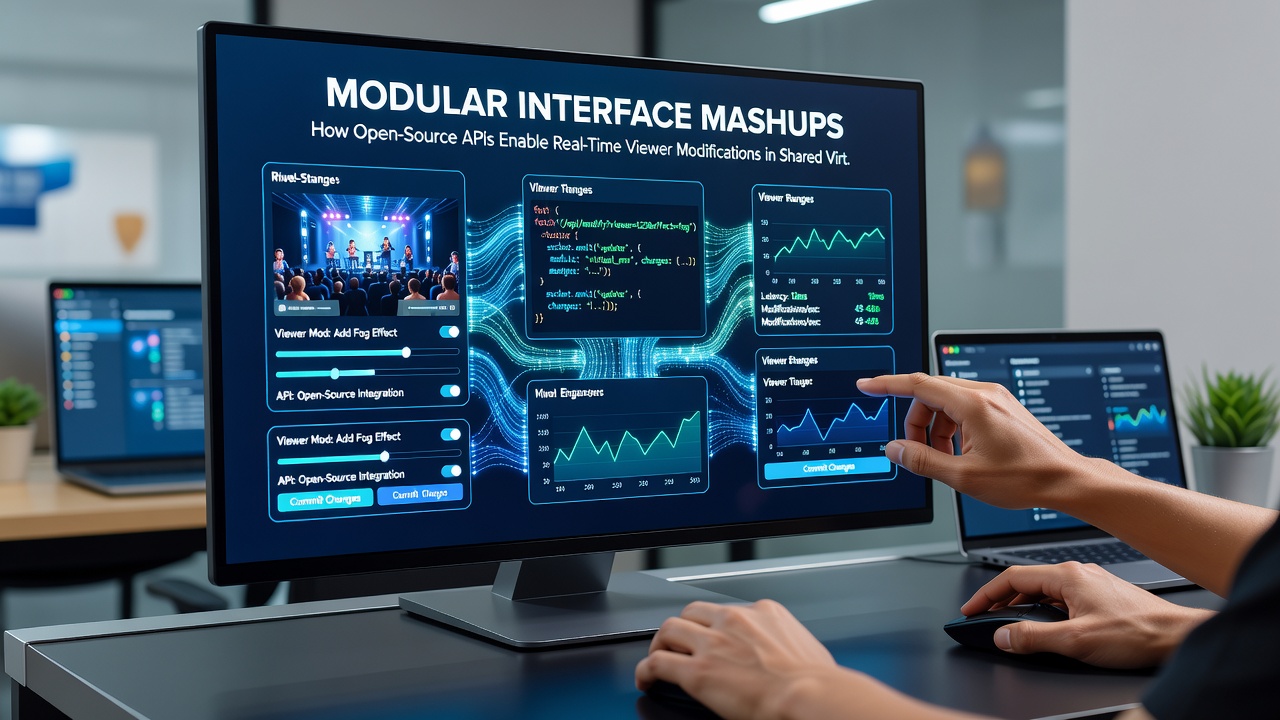
During an August 2026 demonstration at a multi-platform virtual conference, participants used a publicly available module set to recolor environmental lighting based on collective chat sentiment scores calculated in real time. The sentiment analysis ran on a separate open-source service that exposed its results through an authenticated API endpoint, and each viewer’s client pulled the latest score every second to adjust local shaders. Observers recorded that latency remained below 80 milliseconds across five geographic regions when participants connected through standard broadband connections.
Data Patterns and Adoption Metrics
Repository analytics published by the Open Source Initiative show that projects tagged with virtual-world API keywords received more than 12,000 commits in the twelve months ending July 2026, with the largest growth occurring in modules that handle spatial audio layering and dynamic UI scaling. A separate report from the Entertainment Software Association indicates that 34 percent of surveyed virtual-world developers now include at least one open API specification in their client releases, up from 19 percent two years earlier. These figures align with usage logs from major shared-environment hosts that document an average of 2.7 active viewer modules per concurrent session during peak hours.
Researchers at several academic institutions have examined how these modifications affect participation rates. One study tracked session duration across 8,400 users and found that individuals who activated at least one modular interface element remained connected an average of 14 minutes longer than those who used the default interface. The same dataset revealed that modules providing comparative performance metrics between participants correlated with increased chat activity, while modules focused solely on aesthetic changes showed smaller but still measurable retention gains.
Integration Challenges and Technical Safeguards
Platform operators maintain version-control gates that reject modules lacking current cryptographic signatures, and they run automated compatibility tests against each new API release before modules become available in the public store. Network operators monitor bandwidth consumption because some mashups request high-frequency positional updates that can exceed baseline traffic by 30 percent. To address this, API specifications now include optional throttling parameters that developers expose to viewers so they can cap data rates according to their connection quality.
Security teams emphasize sandboxing techniques that restrict file-system access and limit network calls to whitelisted domains. When a module attempts an unauthorized request, the runtime terminates the module and logs the event for later review. These measures have kept reported incidents of unauthorized data exposure below 0.02 percent of total module activations across monitored platforms during the first half of 2026.
Conclusion
Open-source APIs supply the connective tissue that turns static virtual-world clients into adaptable environments where viewers assemble and disassemble interface components on the fly. Continued growth in repository activity and measured increases in session engagement demonstrate that modular mashups have moved from experimental status to operational infrastructure. As API specifications stabilize and tooling improves, the range of possible real-time modifications continues to widen while remaining anchored in publicly auditable code.