Server-Side Symbiosis: How Custom Plugins Merge Chat Commands With In-Game Events for Interactive Broadcasts
Ulrich Keller · Jun 2, 2026
Server-Side Symbiosis: How Custom Plugins Merge Chat Commands With In-Game Events for Interactive Broadcasts
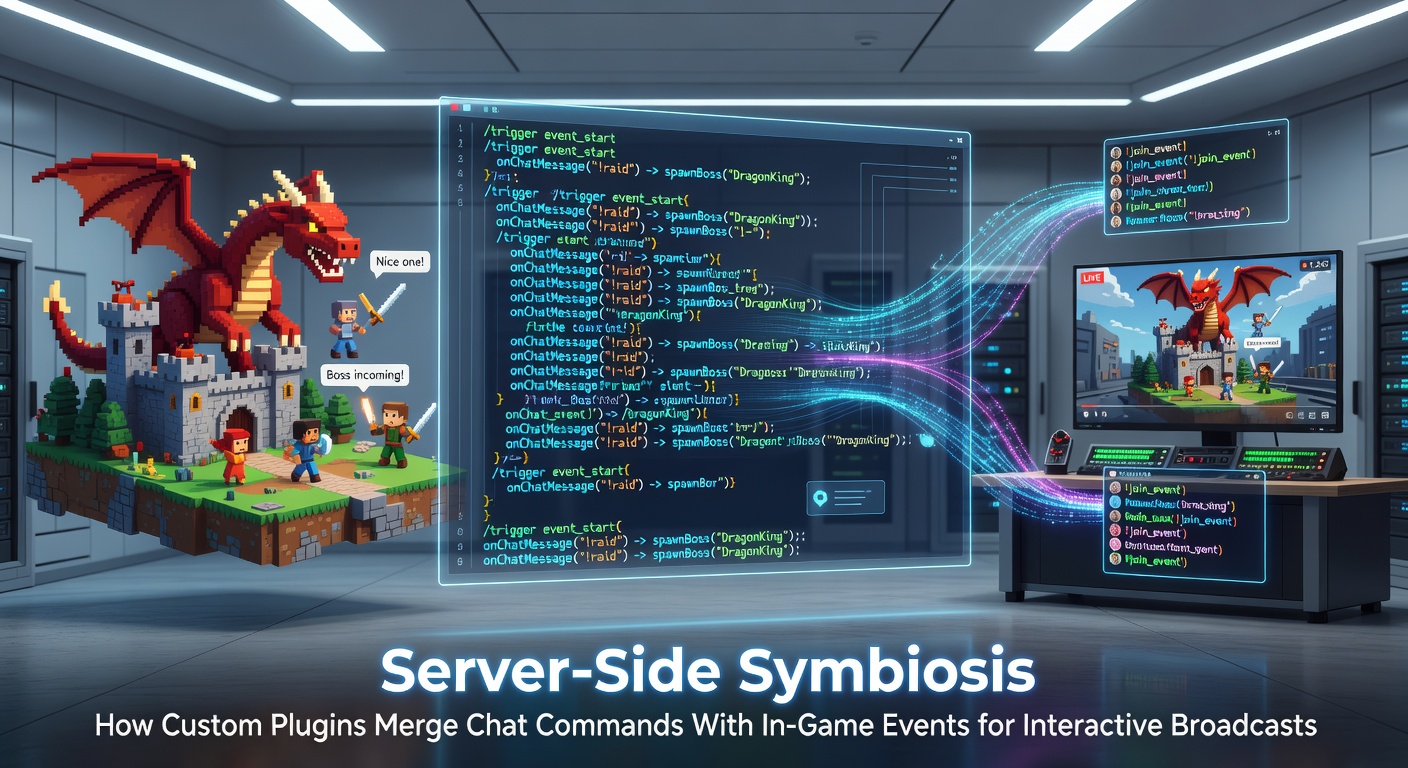
Server-side symbiosis refers to the integration of custom plugins that connect viewer chat inputs directly to in-game events in live streaming environments, and this approach has gained traction among broadcasters who seek deeper audience participation without relying solely on client-side modifications.
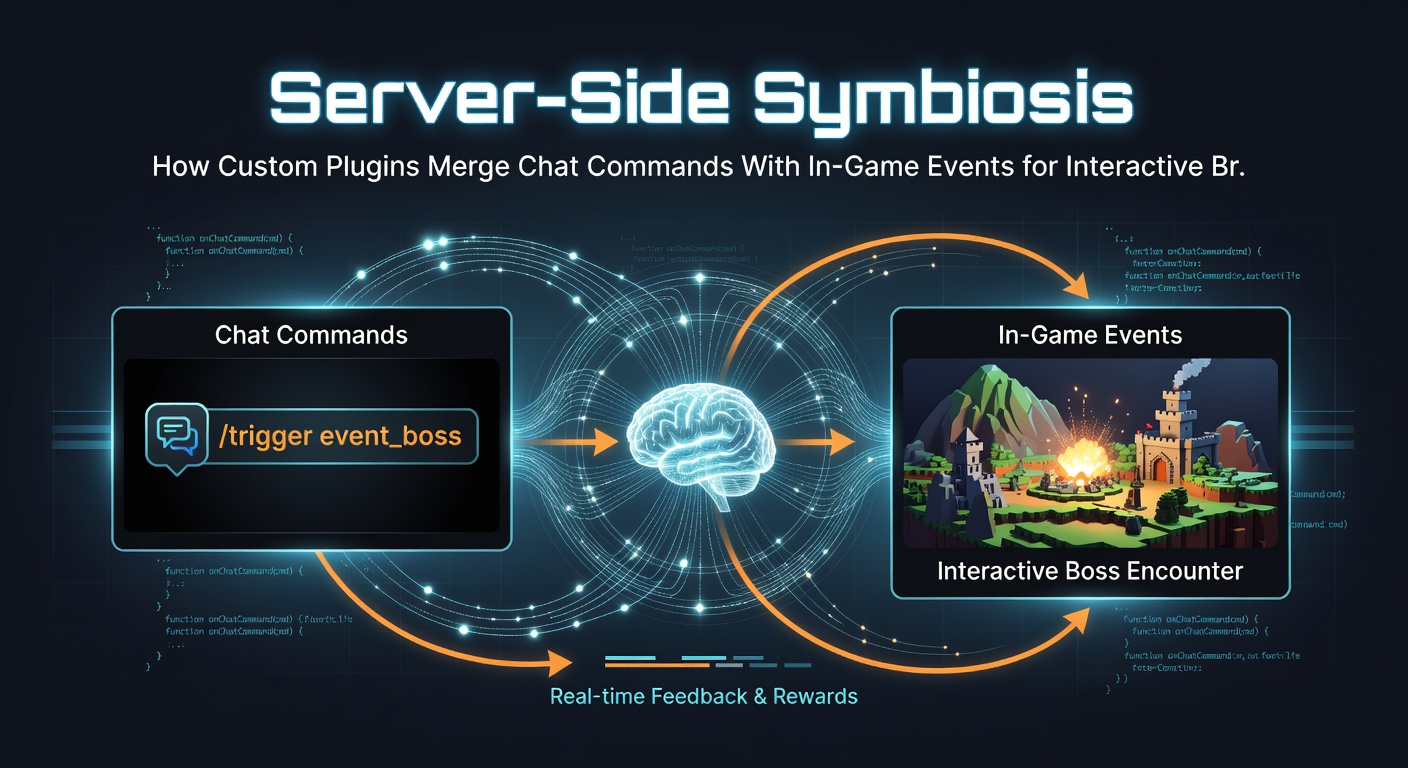
Developers create these plugins to run on dedicated game servers where they listen for specific chat commands from platforms such as Twitch or YouTube, then translate those inputs into actions like spawning items, altering weather conditions, or triggering narrative branches within the game session. Observers note that the process relies on API bridges that maintain synchronization between the streaming service and the game server, which ensures commands execute in real time while preserving server stability during peak viewership periods.
Core Mechanics of Plugin Integration
Custom plugins operate through event listeners that parse incoming chat messages against predefined syntax rules, and once a match occurs the plugin dispatches a corresponding function call to the game engine. Researchers have documented cases where these listeners handle thousands of concurrent messages by queuing lower-priority commands during high-traffic moments, which prevents server overload while still delivering responsive interactions. The system often incorporates rate-limiting modules that cap command frequency per viewer, thereby maintaining fairness across the audience base.
Data from industry reports indicate that such plugins frequently interface with databases that track viewer contribution histories, allowing streamers to reward repeated participants with elevated command privileges or exclusive event access. This tracking occurs server-side so that the information persists across multiple broadcast sessions without requiring viewers to maintain separate client configurations.
Implementation Across Game Genres
In multiplayer survival titles, plugins commonly link chat commands to environmental changes such as resource spawns or enemy reinforcements, while role-playing servers use the same framework to advance story arcs based on collective viewer decisions. One documented implementation in cooperative shooters allows chat votes to select loadout modifications for the streamer’s team, with the plugin enforcing vote tallies through randomized tiebreakers when participation levels create even splits.
Strategy game broadcasters have adopted plugins that translate viewer suggestions into unit deployments or terrain alterations, and these setups often include simulation previews that let the streamer review proposed changes before final execution. Technical documentation from development communities shows that plugin authors achieve cross-genre compatibility by abstracting event triggers into modular scripts that game servers can load independently of the core title code.
Security and Performance Considerations
Server administrators implement sandboxed execution environments for these plugins to isolate potentially disruptive commands from critical game systems, and encryption protocols protect the communication channels between chat APIs and the game server. Performance metrics collected during major tournaments in early 2026 revealed that optimized plugins added less than 15 milliseconds of latency to command processing when running on appropriately provisioned hardware.
Those who maintain large-scale streams report that regular audits of plugin code help identify vulnerabilities that could allow malicious viewers to exploit command parsing, and automated logging systems record every executed action for post-broadcast review. Regulatory guidance from bodies such as the Entertainment Software Association emphasizes transparent disclosure of interactive features so that audiences understand how their inputs influence gameplay outcomes.
Viewer Engagement Patterns in Mid-2026
Analytics platforms tracking streams throughout June 2026 recorded elevated retention rates during segments that featured active plugin-driven events compared with standard broadcast intervals, and the increase correlated with higher message volumes in associated chat channels. European research coordinated through the European Games Developer Federation examined participation data across multiple titles and found that viewers who issued successful commands returned to subsequent streams at rates 22 percent above baseline averages.
Broadcasters schedule themed event windows where plugins enable limited-time mechanics such as boss encounters or limited-resource challenges, and these windows often coincide with scheduled maintenance periods that allow server-side updates without interrupting ongoing matches. The approach keeps interactions contained within controlled parameters while still offering viewers tangible influence over the broadcast narrative.
Conclusion
Server-side symbiosis through custom plugins continues to evolve as developers refine command parsing algorithms and expand compatibility with emerging streaming protocols, and the resulting systems deliver structured pathways for audience participation that integrate seamlessly with existing game infrastructure. Continued monitoring of performance data and security practices supports ongoing refinement of these interactive broadcast tools.