Threshold Triggers: Detecting Peak Chat Activity Moments to Auto-Adjust Camera Angles in Live Gaming Productions
Quinn Beck · Aug 16, 2026
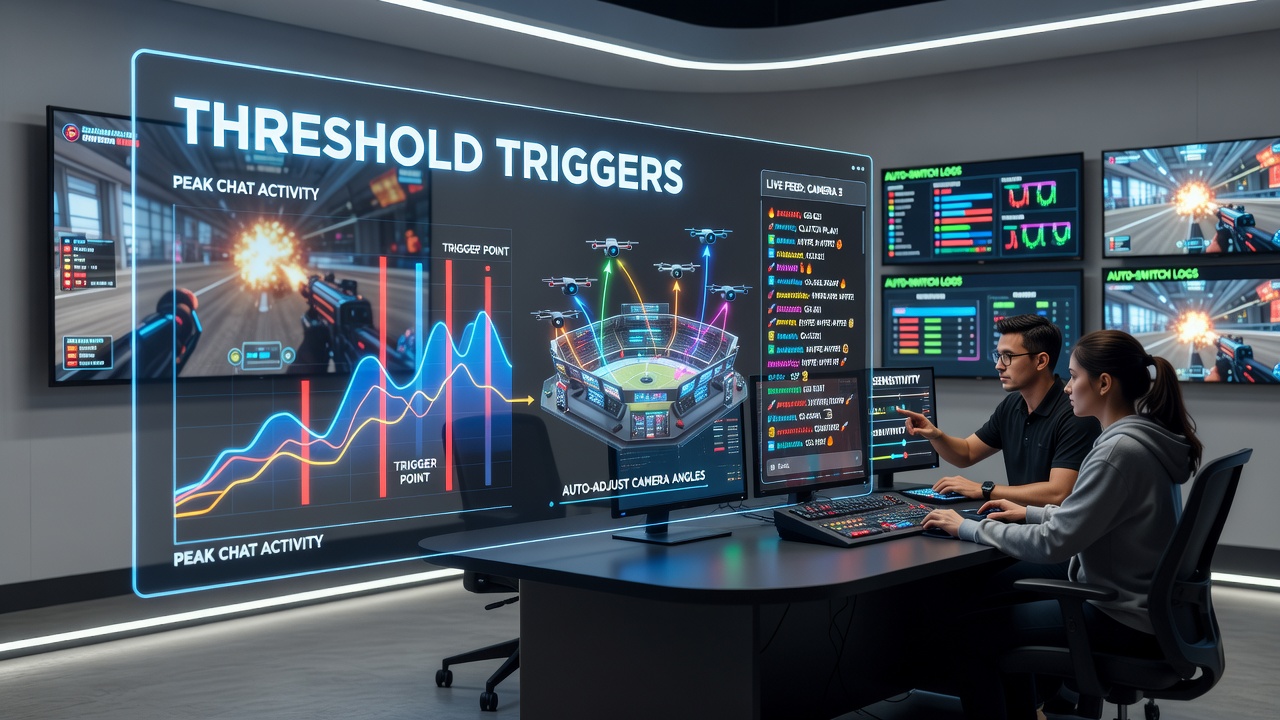
Threshold Triggers: Detecting Peak Chat Activity Moments to Auto-Adjust Camera Angles in Live Gaming Productions
Threshold triggers operate by monitoring real-time chat volume and sentiment spikes in live gaming broadcasts, then automatically shifting camera perspectives when activity crosses predefined levels, and this process relies on algorithms that process message frequency alongside keyword clusters to identify moments of heightened viewer engagement. Observers note that such systems integrate with production software suites to execute seamless transitions without manual intervention from directors, while data from multiple esports events demonstrates consistent activation patterns during critical in-game plays. Researchers at institutions across Europe have documented how these triggers reduce response times from several seconds to under one, allowing productions to capture reactions that align with audience excitement.Core Mechanisms Behind Chat-Based Detection
Systems establish baseline chat rates during quieter periods of a stream and calculate thresholds as multiples of that average, often using machine learning models trained on historical broadcast data to refine accuracy over successive events. When message counts surge beyond the set limit within a sliding time window, the trigger activates linked camera controls that pan or zoom toward player reactions or in-game highlights, and this occurs through API connections between chat platforms and hardware like PTZ cameras. Studies conducted by Canadian academic teams reveal that incorporating natural language processing filters out spam while prioritizing emotionally charged phrases, which improves trigger reliability during chaotic multiplayer sessions.
Production teams configure multiple threshold tiers so minor activity increases prompt subtle angle shifts whereas major spikes initiate full scene changes, and integration with tools such as OBS Studio or vMix allows for layered overlays that maintain visual continuity. Data indicates these configurations appear in tournaments hosted throughout 2025 and into August 2026, where organizers reported fewer missed moments compared with traditional manual switching methods.
Implementation Across Gaming Formats
Esports leagues apply threshold systems to team-based titles where chat reactions often cluster around team wipes or comebacks, enabling cameras to focus on coach reactions or crowd displays automatically, whereas solo streamer setups use lighter versions that adjust between face cam and gameplay views based on viewer comments. Industry reports from the Asia-Pacific region highlight adoption rates climbing steadily as hardware costs decline and software plugins become more accessible to mid-tier productions. Those who manage live events observe that combining threshold data with viewer location analytics further tailors angle selections to regional preferences during international co-streams.
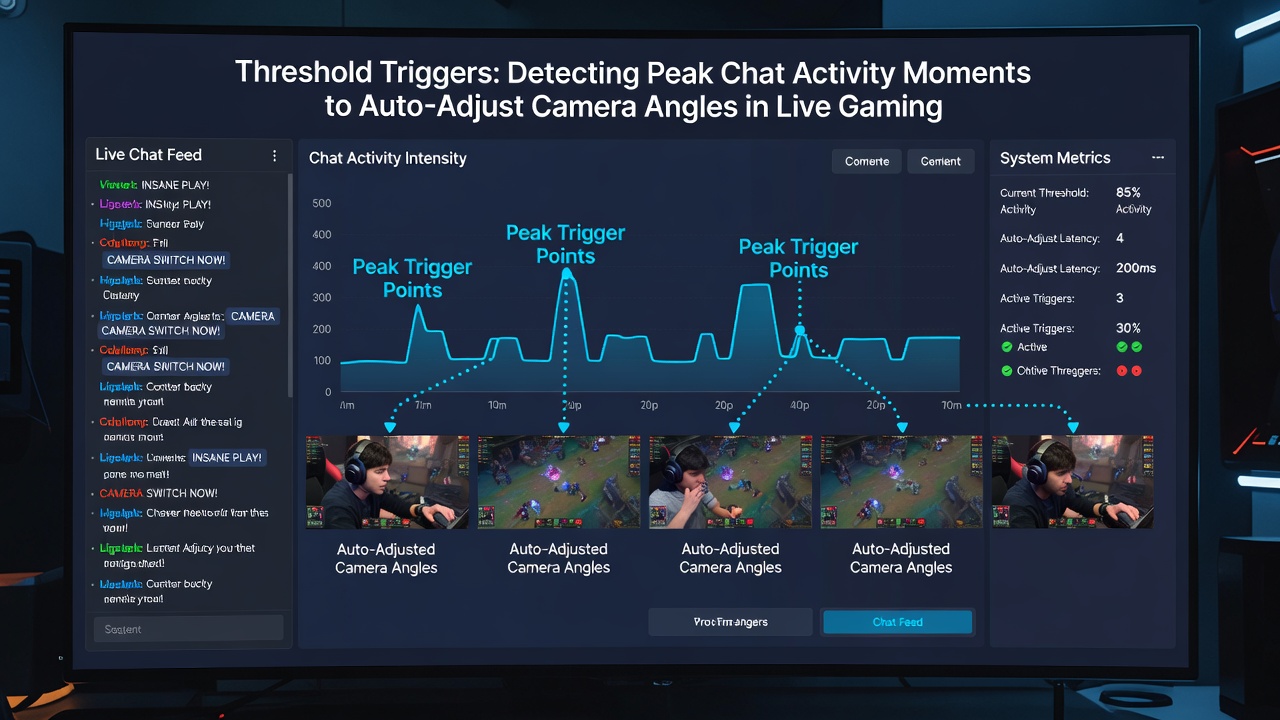
Technical Integration and Data Sources
Developers connect chat APIs directly to trigger engines that output commands to camera controllers, and calibration involves testing against recorded streams to set response sensitivities that avoid false positives during routine chat traffic. According to findings published by the Institute of Electrical and Electronics Engineers, fusion of chat metrics with audio level monitoring produces more robust triggers that account for both textual and vocal audience responses. In August 2026 several platforms introduced updated SDKs that standardize these connections across different broadcast software, reducing setup time for new productions.
Additional layers incorporate sentiment analysis scores derived from emoji usage and repeated phrases, allowing systems to distinguish celebratory spikes from frustrated ones and adjust angles accordingly, such as moving toward supportive player expressions during positive surges. Research from Australian universities has examined latency impacts on remote camera operations and found optimized networks keep delays below perceptible thresholds for most viewers.
Challenges in Scaling Threshold Systems
High-volume chats in massive audiences can overwhelm basic filters, leading teams to deploy distributed processing servers that handle message parsing in parallel before feeding aggregated signals to the trigger module, and this architecture appears in large-scale events covered by the Entertainment Software Association. Calibration drift occurs when viewer demographics shift between events, prompting periodic recalibration sessions that use fresh data sets to maintain performance standards. Observers note that hybrid human oversight remains common during early deployment phases to verify automated decisions against production goals.
Conclusion
Threshold trigger technology continues to evolve through iterative refinements drawn from live deployment data, enabling productions to synchronize visual storytelling with audience energy peaks in ways that manual methods struggle to match consistently. As integration standards mature and processing capabilities expand, more broadcasters incorporate these tools into standard workflows for both competitive and casual gaming content.