Wearable Sensor Data Fuels Real-Time Interactions in Esports Streaming
Quinn Beck · Aug 25, 2026
Wearable Sensor Data Fuels Real-Time Interactions in Esports Streaming
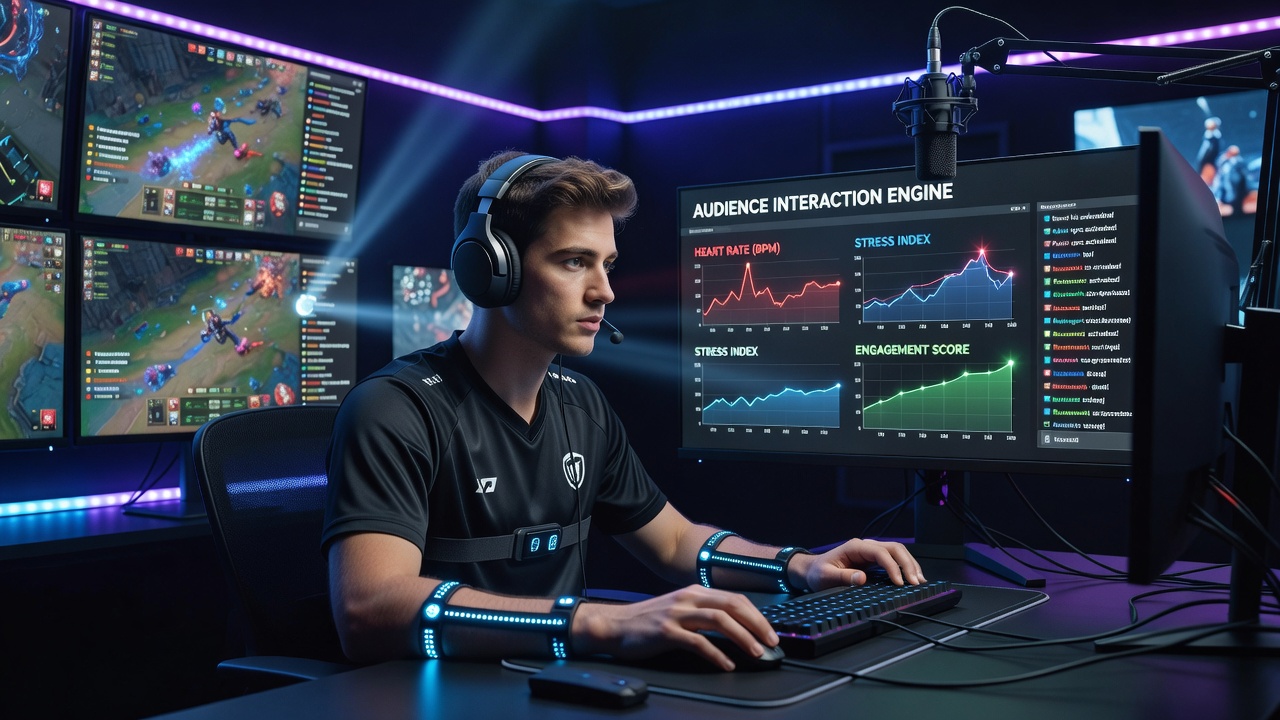
Esports streaming platforms now pull live data from player wearables such as heart rate monitors, motion trackers, and electrodermal sensors then route those metrics straight into audience tools that let viewers trigger in-stream events or adjust overlays on the fly, and this integration has grown steadily since early pilot programs in 2023. Data flows through low-latency APIs that connect devices like smart bands and chest straps to streaming software, where thresholds on pulse or skin conductance can activate chat commands or visual effects that hundreds of thousands of spectators see simultaneously.
Core Components of Sensor-to-Stream Pipelines
Hardware manufacturers supply Bluetooth-enabled bands that sample biometric signals at 100 Hz or higher while software layers normalize the incoming numbers and map them to predefined audience actions, and studies from research institutions show that heart rate spikes above 140 beats per minute often correspond to high-tension moments that platforms convert into poll options or emote bursts. Observers note that calibration routines run before each broadcast to align individual baselines with global triggers so that one player’s elevated readings do not overwhelm another’s steadier profile during team competitions.
Network engineers route the processed streams through dedicated edge servers that keep total added delay under 200 milliseconds, a figure confirmed in technical reports issued by the Institute of Electrical and Electronics Engineers during its 2025 gaming technology summit. Viewers interact via platform extensions that read the same live metric feed, enabling collective decisions such as requesting a slow-motion replay when aggregate stress levels cross a set value.
Implementation Across Major Tournaments
Production crews at international events embed sensor hubs into player stations so that data packets travel alongside video and audio without separate encoding passes, and this parallel workflow has become standard in circuits that broadcast to millions of concurrent users. In August 2026 several regional finals adopted unified protocols that let audience members wearing their own consumer-grade fitness trackers contribute secondary data points, creating a two-way biometric conversation between competitors and spectators.
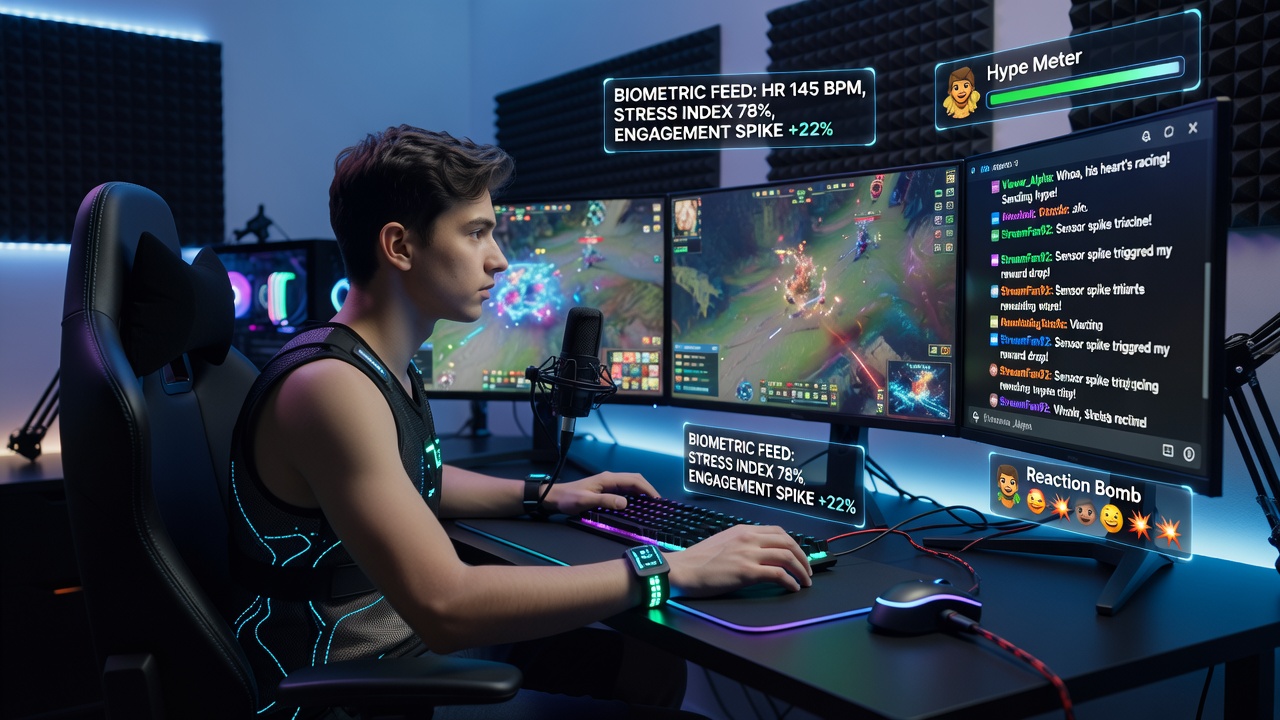
One documented case involved a cooperative title where viewer-submitted galvanic skin response averages influenced in-game lighting changes, and the setup required only firmware updates on existing capture cards rather than new hardware purchases. Figures released by the Global Esports Federation indicate that streams employing these sensor-linked features recorded 18 percent longer average watch times compared with standard overlays during the same event windows.
Data Privacy and Latency Considerations
Platforms mask individual identifiers before pushing aggregated statistics to public dashboards, satisfying data-protection requirements that differ across North American, European, and Asia-Pacific jurisdictions, while encryption standards such as TLS 1.3 protect the raw streams in transit. Latency budgets remain tight because any delay above 300 milliseconds breaks the illusion of real-time responsiveness, prompting developers to offload heavy filtering to on-site edge nodes instead of cloud instances located farther away.
Researchers at several universities have published open datasets that document how motion-sensor fusion reduces false positives when audience votes rely on combined heart-rate and accelerometer inputs, and these resources help smaller production teams replicate enterprise-grade reliability without proprietary toolchains. Compliance teams run periodic audits to verify that sensor consent forms remain current and that data retention windows do not exceed 30 days unless explicit viewer permission extends the period.
Future Directions for Broader Adoption
Industry groups continue to refine open APIs that allow third-party overlay developers to subscribe to biometric channels without rebuilding core streaming infrastructure, and pilot programs scheduled for late 2026 aim to incorporate EEG headbands that translate focus metrics into subtle background music shifts for viewers. Equipment costs have declined as consumer wearables gain medical-grade accuracy, lowering the barrier for amateur casters who want to offer the same level of interaction previously reserved for arena-scale productions.
Conclusion
Integration of wearable sensor data into esports streams now supports direct audience participation through metric-triggered events, standardized pipelines, and privacy safeguards that scale across global events. Continued refinement of latency controls and cross-platform consent frameworks positions the approach for wider use in both professional circuits and grassroots broadcasts throughout the remainder of 2026 and beyond.